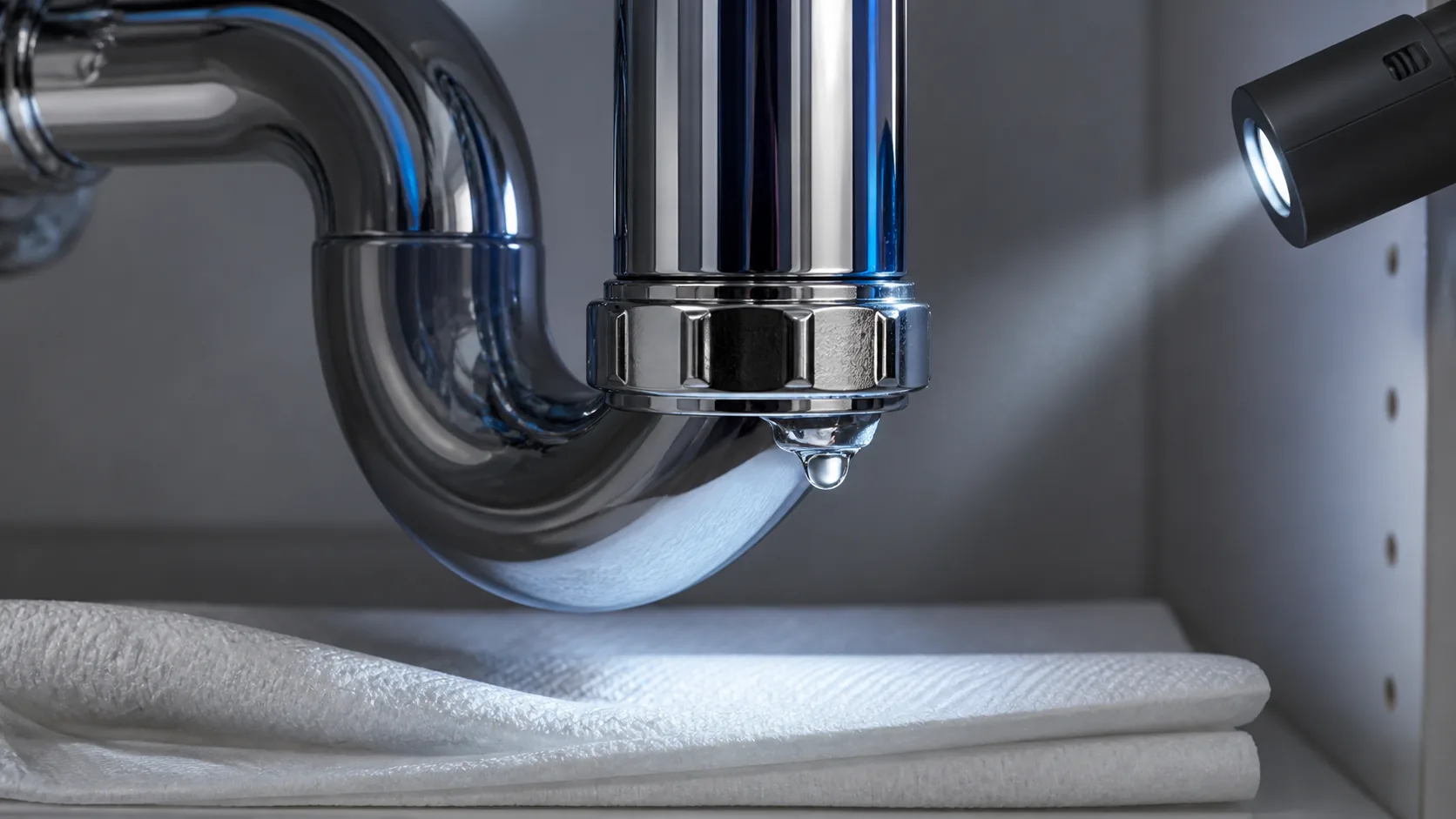
A slow leak may leave droplets, swelling, stains, odor, corrosion, or mineral residue before a puddle appears. A short routine check can make those signs easier to notice.
Do not reach into standing water near an outlet, disposal connection, damaged cord, or exposed wiring. Keep clear of sewage, widespread mold, or a pressurized spray. Use an appropriate qualified professional for unsafe or uncertain conditions.
Clear and dry the cabinet
Remove stored products. Dry visible moisture so a new droplet is easy to identify. Use a flashlight to look behind supply lines and along the back wall.
Inspect supply connections
Without forcing or turning fittings, look and feel for fresh moisture around shutoff valves, flexible hoses, faucet supply connections, filter housings, and appliance lines.
Test the drain path
Place a dry paper towel beneath the drain joints. Run the faucet, fill and release the basin, then inspect the trap, slip joints, disposal flange, dishwasher connection, and surrounding cabinet floor.
Check seals and cabinet surfaces
Look around the sink rim and faucet base above the cabinet. Inside, check for softened material, raised edges, peeling finish, stains, or a musty odor. Hidden damage can extend beyond the visible wet area.
Record and recheck
Photograph the location, note when moisture appears, and keep the area accessible. A mat can contain a small spill, but it should not hide the source or delay a repair.
This guide supports routine observation, not plumbing diagnosis. Follow manufacturer instructions and local requirements.