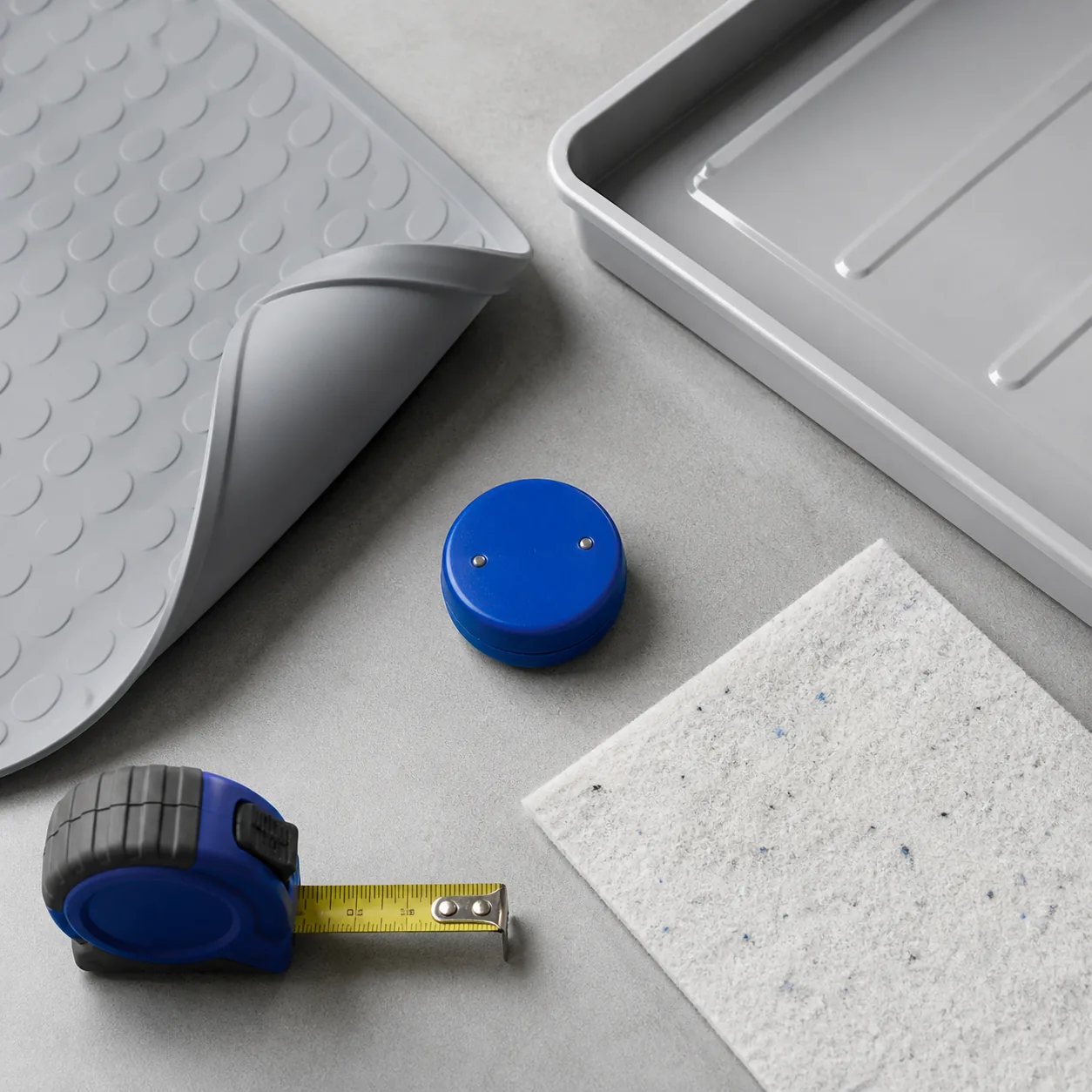
Under-sink protection has three different jobs: shield the cabinet surface, contain a small spill, and help you notice moisture. One product may not do all three.
Choose the job first
If the main risk is a slow plumbing drip, prioritize a waterproof surface with raised edges and a clear inspection path. If the cabinet mainly needs protection from bottles and scuffs, a removable liner may be enough. If early warning matters, add a leak sensor rather than assuming a mat will notify you.
Compare the main options
Flexible waterproof mat
Useful around irregular plumbing and curved cabinet walls. Check whether the edge can stay upright after trimming or folding.
Rigid tray
Holds a defined shape and can be easy to remove. Confirm that the door opening and center divider allow the tray to pass through.
Absorbent liner
Helps with scuffs and minor bottle residue, but absorbed water may stay hidden. It is not a substitute for leak containment.
Leak sensor
Adds an alert when placed at a likely low point. Follow the manufacturer instructions for placement, testing, batteries, and connectivity.
Check the fit before ordering
Measure the usable cabinet floor, not the exterior cabinet width. Note supply lines, drain pipes, disposal units, filters, door lips, and fixed dividers. A mat that cannot lie flat or be removed for cleaning will be harder to inspect.
Look for maintainable details
- A surface that can be wiped without trapping residue
- Edges high enough for the small spills you expect
- Color and texture that make new moisture visible
- Access to valves and plumbing connections
- A removal path that does not require disconnecting plumbing
Know the limits
A mat does not repair plumbing, stop a pressurized supply-line failure, or make electrical hazards safe. If water is near an outlet, disposal connection, damaged wiring, or active mold, keep clear and contact an appropriate qualified professional. Follow product instructions and local requirements.